
Commercial · Built-Up
Redundancy, by the layer.
Multiple asphalt plies with gravel or cap-sheet surfacing, the heavyweight system for roofs with foot traffic, equipment, and long ownership horizons.
Where BUR fits
When one layer isn't enough.
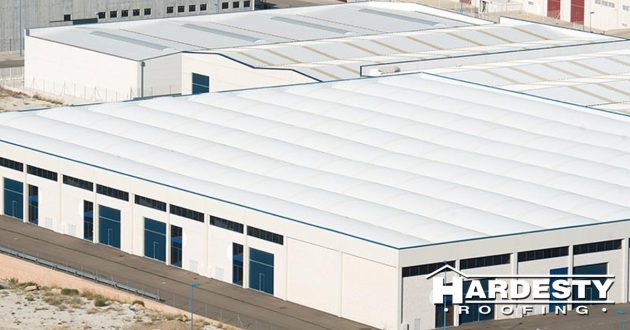
A single-ply roof is one puncture from a leak; a built-up roof has three, four, or five plies between the weather and the deck. That redundancy is why BUR still makes sense under heavy rooftop equipment, service walkways, and maintenance traffic.
It's also the system many older Central Virginia buildings already have, and we repair and extend existing BUR as often as we install it new.
Commercial services
The rest of the flat-roof toolbox.
TPO
Heat-welded single-ply with a reflective white surface that cuts summer cooling loads. The workhorse for warehouses and big open decks.
Learn moreEPDM
The proven black rubber membrane, decades of field history, excellent in freeze-thaw, and economical to repair as it ages.
Learn morePVC
Chemically resistant and heat-welded, the right answer over kitchens, labs, and anywhere grease or chemicals hit the roof.
Learn moreModified Bitumen
Asphalt toughness in rolled sheets, granule-surfaced, well-suited to smaller commercial roofs and mixed-slope buildings.
Learn moreCommercial Repair
Leaks at curbs, seams, and drains, found, documented, and fixed before they reach the deck.
Learn moreFlat Roof Repair
Ponding, blistering, open seams, and failed flashings on any of the five major membrane systems.
Learn moreQuick answer
Hardesty Roofing installs and repairs built up roofing across Central Virginia. Built up roofing, often called tar and gravel, alternates layers of bitumen with reinforcing ply sheets and finishes with a gravel or cap sheet surface. It is the oldest low slope system still in wide use and remains one of the most durable, particularly on roofs that take abuse. Class A licensed, roofing from Midlothian since 1990. Call 804-523-9955.
What built up roofing is
Layers, and the redundancy that comes with them.
Built up roofing is the original commercial low slope system and it has been in continuous use for well over a century. Alternating layers of bitumen and reinforcing ply sheets are assembled on the roof into a single monolithic membrane, then surfaced, usually with gravel or a granulated cap sheet.
Its enduring argument is redundancy. A single ply membrane has one layer between the building and the weather. A four ply built up roof has several, so a puncture that would breach a single ply system frequently does not reach through a built up assembly. Its disadvantages are weight, installation time, and that repairs require someone who genuinely knows the system.
- Plies
Multiple alternating layers of bitumen and reinforcement, built into one continuous membrane on the roof.
- Surfacing
Gravel or a granulated cap sheet, which shields the bitumen below from ultraviolet light.
- Weight
Significantly heavier than single ply. The structure has to be able to carry it, which we confirm rather than assume.
What it costs
What drives a built up roofing number.
Built up roofing is typically among the more expensive low slope systems to install, because it is labor intensive and materially heavy. What it buys is durability and redundancy, which is why it persists on buildings whose owners intend to hold them for a long time.
On an existing gravel surfaced roof, one cost factor catches people out: if a tear off is required, removing gravel and multiple plies is considerably more work than stripping a single ply membrane, and disposal weight is higher.
- Number of plies
More plies means more redundancy, more material and more labor. This is the primary specification decision.
- Surfacing
Gravel or cap sheet. Both protect the bitumen from UV, with different weight and appearance implications.
- Tear off
Removing an existing gravel surfaced built up roof is heavy work with high disposal weight.
- Structural capacity
The assembly is heavy. Where the structure will not carry it, a lighter system is the correct answer.
What to expect
How a built up roof goes on.
Free inspection
We assess the existing roof, confirm the structure can carry the assembly, probe for saturated insulation, and review drainage before specifying plies and surfacing.
Written estimate
You get a written estimate with the options laid out and no vague line items. We explain the tradeoffs and give you our honest recommendation, including when the cheaper option is the right one.
Scheduled work
We schedule around you and show up when we said we would. Crews protect landscaping and vehicles, and magnet-sweep for nails at the end of every working day, not just the last one.
Final walk and paperwork
We walk the finished job with you, answer anything still open, and hand over the warranty documentation. Manufacturer coverage gets registered at closeout, because it is not real until it is registered.
Warranty
Two promises, and they are not the same promise.
Commercial roofs carry two separate warranties. The membrane manufacturer warrants the material and, on some systems, the installed assembly. Hardesty warrants the workmanship. They are different promises with different terms.
Membrane warranty length varies widely by system, by membrane thickness, and by whether the manufacturer inspects the finished job. We tell you what the specific assembly qualifies for before the work is specified, not after.
- 5 yrs
Hardesty's own workmanship warranty on labor. If our installation fails, we come back and fix it.
- Varies
Membrane coverage is set by the manufacturer and varies by system and thickness. Longer terms generally require heavier membrane and a manufacturer-inspected installation.
- In writing
You get the term for the exact material you choose, in writing, before you sign anything.
Common questions
Built-up roofing questions.
Is built up roofing the same as tar and gravel?
Yes, that is the common name for it. Alternating layers of bitumen and reinforcing ply sheets, surfaced with gravel.
Is it outdated?
No, though it is specified less often than it once was because single ply systems are lighter and faster to install. Built up roofing remains one of the most durable low slope assemblies available, and it is still the right answer on some buildings.
Why is there gravel on my roof?
The gravel shields the bitumen underneath from ultraviolet light, which is what would otherwise degrade it. It also adds some protection against foot traffic and impact.
Can a built up roof be repaired?
Yes, though it needs someone who knows the system. Finding a leak under gravel is harder than on an exposed membrane, because the entry point may be some distance from where water appears below.
How long does a built up roof last?
Built up roofing is known for long service life, driven by the number of plies, the surfacing and drainage. Multiple plies mean a puncture often does not reach through the full assembly.
Is it heavy?
Yes, significantly heavier than single ply. The structure must be able to carry it, which we confirm during the assessment rather than assume.
Should we replace our built up roof with single ply?
It depends on the building and on how long you plan to hold it. Single ply is lighter, faster and usually cheaper. Built up gives redundancy. We install both and will give you a straight comparison.
Can you recover over an existing built up roof?
Sometimes, depending on how many layers are already there, whether the insulation is dry and what code allows. We probe first.
Free Estimate
Put a Hardesty roof over it.
Walk-throughs and estimates are free, written, and scoped for your budget cycle, repair, restore, or replace.
804-523-9955Prefer to talk? Call the shop directly. 14430 Sommerville Court, Suite B · Midlothian, VA 23113
Worried about the cost? We offer in-house financing. Ask and we will walk you through it.
Ask About Financing