
Resources · Insurance and storm damage
How Seasonal Weather Can Affect or Damage Your Home
How each season of Virginia weather works on your roof and exterior, and the maintenance that keeps small seasonal damage from turning into an expensive repair.
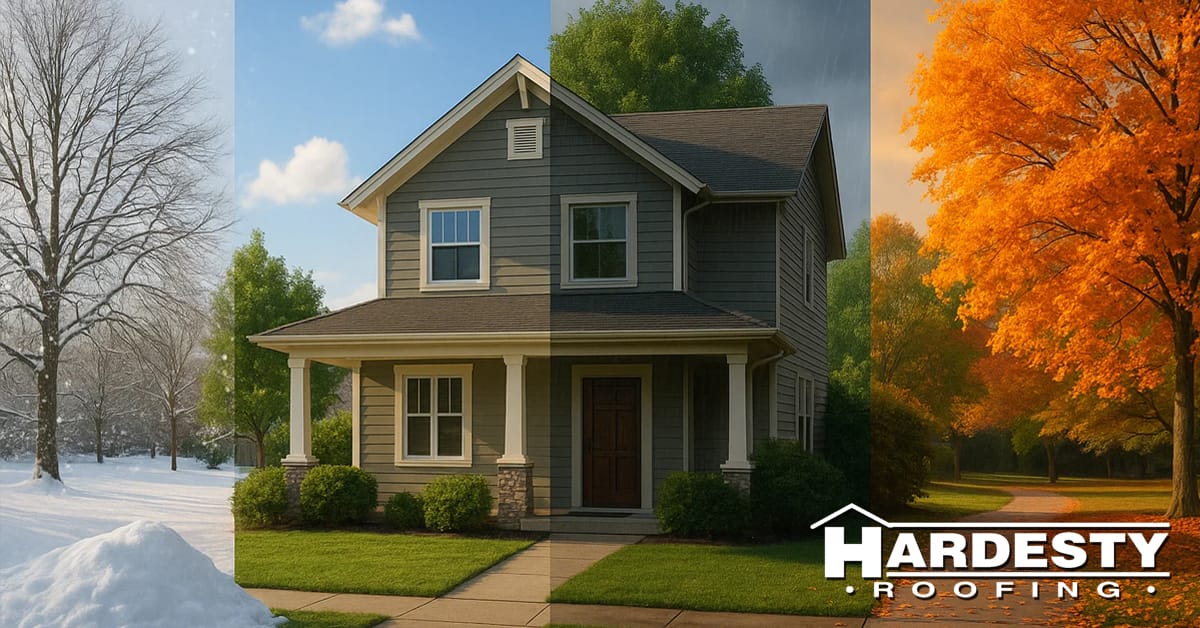
You work hard to keep that roof over your head. That's why it's important to maintain your home's longevity. Paying attention to the seasonal weather changes that affect your home will save you a significant amount of time and money. And, while you may initially think of the harshest of conditions mother nature throws our way (i.e. hurricanes, tornados, blizzards, etc.), it takes far less to cause deterioration of a home's structure over time. Luckily, an ounce of prevention is worth a pound of cure. Listed below are damaging weather conditions that arise year-round, and simple ways you (or a service professional) can protect your home.
While many of these solutions can likely be done on your own, if you're looking for contractors, you'll want to be sure they're licensed and insured. You may also want to check online reviews to see what others in your community have to say about them. GAF certified roofing contractors* can be sorted on GAF.com based on star recommendation ratings.
The Spring and Summer seasons bring a wave of excitement for warmer weather, beach days, vacations, barbeques, and fun indoor activities. Yet, we often forget that summer can bring about some of the most severe storms, fires, hail, and floods. In fact, nearly 1 in 3 Americans experienced a weather disaster in the summer of 2021** and this trend is expected to continue. So, bracing your home to withstand the elements is more important than ever.
Roof: Your home's roof system takes the brunt of weather damage. To ensure your roof can hold up to the challenges that mother nature presents, you'll want to regularly check that your roofing system is in good condition to prevent water infiltration into your home.
Solution #1: Clean your gutters and downspouts as needed to ensure water is running off your roof and away from your home properly. A full or clogged gutter may cause water to back up onto your roof and into your attic and may even cause the gutter itself to fall from excessive weight.
Solution #2: The best preventative maintenance is having a professional roofing inspection. Spring is an ideal time to hire a licensed roofing contractor* to check for missing or damaged shingles from the previous seasons. This in turn can prevent leaks and water damage as the rainy season approaches. Plus, being proactive with roof maintenance can also help with insurance claims, if and where applicable. Don't forget to also take a look at flashing, valleys and other parts of your roof.
Tested, Proven and Trusted Since 1990
Please fill out the form below for a FREE ESTIMATE or call 804-523-9955 today. Hardesty Roofing has provided outstanding service and quality to customers in the Richmond, VA area since 1990!
Hardesty Roofing is highly experienced with the following applications:
- Hot and Cold-Applied Built-Up
- APP and SBS Modified Bitumen
- Asphalt and Coal Tar Pitch
- Green Roof Systems
- EPDM, PVC and TPO Single-Ply
- Liquid-Applied Membranes
- Architectural Standing Seam Metal Roofing
Four seasons, four problems
What each part of the Virginia year does to a roof.
Central Virginia gives a roof a genuinely broad workout. Humid summers, a spring storm season, freeze thaw cycling in winter, and the leaf load of autumn each attack a different part of the assembly, which is why a roof that survives one season can fail in the next.
- Spring
Storm season. Wind lifts and creases shingles so they no longer seal, and hail bruises them in ways invisible from the ground.
- Summer
Heat. Attic temperatures climb hard, and heat ages shingles from underneath faster than most manufacturer estimates assume.
- Autumn
Debris. Leaves block gutters and valleys, and water that cannot get away goes somewhere it should not.
- Winter
Freeze thaw. Water gets into small gaps, freezes, expands and makes them bigger, and ice damming pushes water back under the shingles.
The one that surprises people
Heat does more damage than storms.
Storms are dramatic and they get the attention, but the thing that quietly takes years off a Central Virginia roof is heat, and specifically heat trapped in the attic. A poorly ventilated attic in July becomes an oven, and the shingles are being cooked from the underside as well as the top.
This is why ventilation is part of every roof we install rather than an upsell. Balanced intake at the eaves and exhaust at the ridge lets that heat move out instead of sitting against the deck. It is the least visible part of a roof system and one of the most consequential for how long the roof lasts.
The practical version for a homeowner: if your upstairs is markedly hotter than the rest of the house in summer, or your attic is uncomfortable to be in, that is worth mentioning at your next inspection. It is often a ventilation problem, and it is usually cheaper to fix than the shortened roof life it causes.
Common questions
Seasonal roof questions.
When should I have my roof inspected?
After storm season is the most useful single time, because that is when wind and hail damage happens and when it is still early enough to file if you need to. An inspection every year or two catches small problems while they are still small.
What is ice damming?
Heat escaping into the attic melts snow on the roof, the water runs down to the colder eave and refreezes, and the ice that builds up there blocks the next lot of water. It backs up under the shingles and into the house. It is a ventilation and insulation problem as much as a roofing one.
Do I really need to clean my gutters?
Yes, particularly in autumn. Blocked gutters overflow, and water that cannot get away from the house goes into the foundation and contributes to ice damming at the eaves in winter.
Is it bad to install a roof in winter?
It needs more care, because shingles seal by warming in the sun and that takes longer in cold weather. It is done routinely and successfully in Virginia, but it is a reason not to defer an urgent repair on the theory that spring is better.
My upstairs is much hotter than downstairs in summer. Is that a roof problem?
Often it is a ventilation problem, which is a roof system problem. Mention it at your inspection. Attic heat shortens roof life and raises cooling costs at the same time.
Free Estimate
Still have a question about your roof?
The inspection is free, the estimate is in writing, and if a repair will do, that is what we will tell you.
804-523-995514430 Sommerville Court, Suite B · Midlothian, VA 23113
Worried about the cost? We offer in-house financing. Ask and we will walk you through it.
Ask About Financing